COLLECTOR GUIDE

Brian Tunney
5 Minutes Read

Vinyl record grading assigns a standardized condition score to a record's disc, sleeve, and packaging at a single point in time. It works the way coin and trading card grading does: a trained inspector applies a defined scale so a "near mint" claim means the same thing across sellers. This guide covers what a grade actually measures, the scale collectors encounter most often, and where grading fits alongside two related but separate concepts: preservation, which protects a record's condition going forward, and provenance documentation, which establishes its history.
Key takeaways
Grading is a standardized assessment of a record's disc, sleeve, and packaging condition at the time of inspection.
Vinyl grading borrows its scale-based structure from established coin grading (PCGS, NGC) and card grading (PSA, BGS).
A grade reflects condition today, not a guarantee of future condition.
Grading differs from preservation. Preservation is the ongoing practice of protecting condition after grading.
Grading differs from provenance documentation. Provenance covers a record's origin and handling history, not its condition.
"Certified Uncirculated" is a provenance designation, not a grade.
What Is Vinyl Record Grading?
Vinyl record grading is a standardized assessment of a record's physical and visual condition at the time of inspection. It covers the playing surface, evidence of use, and the condition of the sleeve and packaging, assigned against a fixed scale rather than a seller's subjective description.
A grade typically covers:
Surface marks, scuffs, and scratches on the playing surface
Evidence of play wear, such as groove wear or light surface noise
Warping or other physical deformation of the disc
Sleeve condition, including seam splits and ring wear
Packaging and insert condition, including any handling or price sticker damage
Grading is a snapshot, not a forecast. It documents condition at inspection. It says nothing about how a record was stored before that point or how it will hold up afterward. Two records can receive the same grade today and diverge significantly in condition five years later, depending on how each one is stored and handled going forward. That's why grading works alongside, not in place of, ongoing preservation practices.
What Grading Scale Do Vinyl Records Use?
Vinyl grading terminology descends from the Goldmine Standard, widely used across the record collecting community, though specific scales vary somewhat by grader and marketplace. Most scales run from immaculate, unplayed condition down through records with significant, audible wear. Common tiers include:
Mint (M): A record in perfect, as-issued condition, with no visible or audible flaws. True Mint is rare in practice.
Near Mint (NM or M-): Extremely close to Mint, with only the slightest imperfections that don't affect appearance or play.
Very Good Plus (VG+): Shows minor signs of handling or light play wear, generally with minimal impact on sound.
Very Good (VG): Noticeable wear from play and handling, with visible marks and some audible surface noise.
Good (G) and below: Significant wear affecting both appearance and playback.
Experience shows how much this can vary in practice. One seller might list a record as "Near Mint" after a quick glance under store lighting. Another might apply the same term only after checking for groove wear under raking light and inspecting the sleeve seams closely. Both listings use the same word. They don't necessarily describe the same record. That inconsistency is exactly what standardized, independent grading is designed to resolve. Spoiler alert: it only complicates the process and can lead to mistrust between sellers and buyers.
What Can Vinyl Grading Learn From Coin and Card Grading?
Coin and trading card collecting faced the same problem vinyl grading addresses now: inconsistent, subjective condition claims. Coin grading solved this decades ago through third-party services like PCGS and NGC, which apply defined numerical scales and independent inspection rather than relying on a seller's description. The Professional Numismatists Guild has long emphasized third-party verification as a baseline for trustworthy transactions in the coin market, a principle that translates directly to any collectible category where condition claims affect a buyer's decision.
Trading cards followed a similar path. PSA and BGS introduced standardized numerical grading scales and independent inspection, replacing seller-provided condition descriptions with a consistent, third-party assessment collectors could compare across listings and sellers.
Vinyl grading borrows the same structural logic: a defined scale, applied by a trained grader following consistent criteria, independent of the seller's own description. What vinyl grading doesn't inherit from those categories is any claim about future value. Coin and card grading assess condition, not investment potential, and the same distinction applies to vinyl. A grade describes what a record is today. It doesn't predict what it will be worth tomorrow.
The comparison isn't an endorsement of any particular grading company, vinyl-specific or otherwise. It's a structural parallel: standardized scales and independent inspection solve the same trust problem in any collectible category.
How Is Grading Different From Preservation?
Grading and preservation solve different problems. Grading tells you what condition a record is in right now. Preservation is what keeps it in that condition going forward. A record can receive an excellent grade and still degrade within a few years if it's stored carelessly afterward.
Grading | Preservation |
|---|---|
Assesses condition at a single point in time | Protects condition on an ongoing basis |
Produces a fixed score or tier | Involves continuous practices: storage, handling, environment |
Documents disc, sleeve, and packaging condition | Prevents future physical, environmental, and chemical damage |
Doesn't change after inspection | Requires consistent upkeep for as long as the record is owned |
Answers: what condition is this record in? | Answers: what keeps this record in that condition? |
General preservation guidance, including humidity and handling standards referenced by institutions like the Library of Congress Preservation Directorate, underscores why condition maintenance requires ongoing practices rather than a single assessment. A high grade is a starting point, not a finish line. Understanding what a preserved record actually is helps clarify why proper storage, stable environment, and careful handling remain necessary after a record has already been graded. Grading and preservation work best as two separate steps in the same process, not substitutes for each other.
How Is Grading Different From Provenance Documentation?
Grading and provenance documentation answer different questions about a record. Grading describes the condition. Provenance describes history, who has owned or handled a record, and under what circumstances, since it was preserved.
Grading assesses the physical state of the disc, sleeve, and packaging at inspection.
Provenance documents a record's origin, acquisition history, and chain of custody over time.
A grade can change if a record is reassessed later. Provenance is cumulative, adding to a record's documented history rather than replacing it.
A record can have an excellent grade with no documented provenance, or extensive provenance with a lower grade. Neither substitutes for the other.
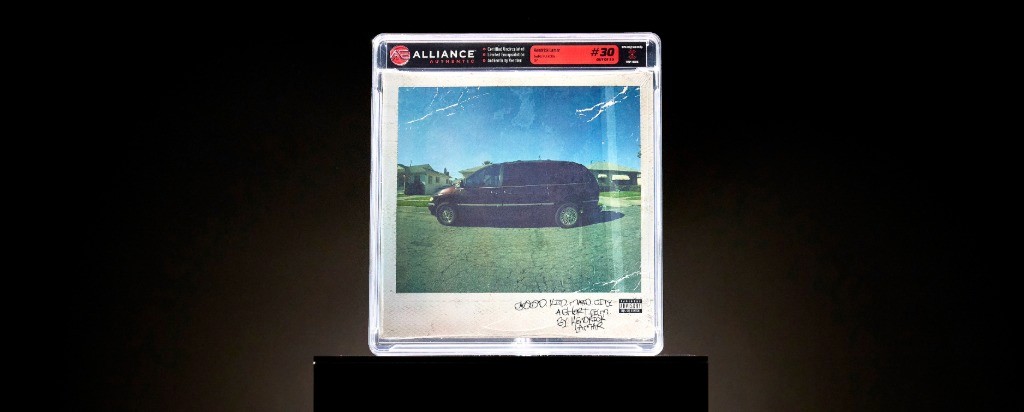
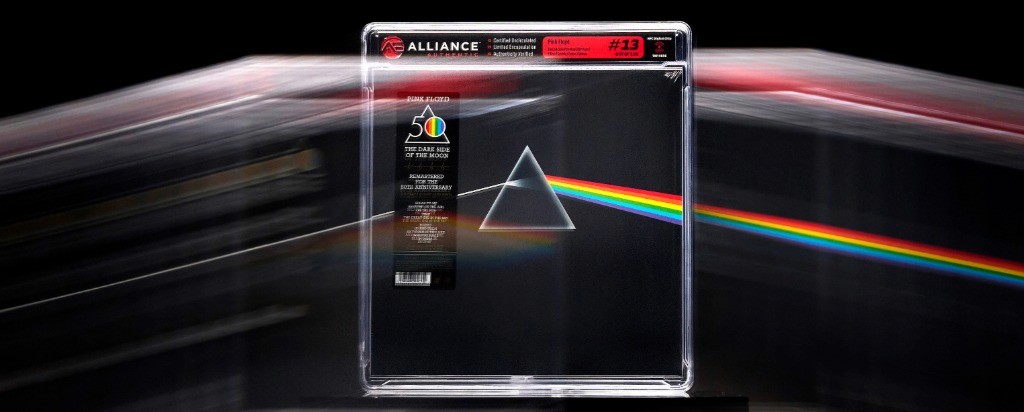
Archival institutions such as the Smithsonian Institution Archives apply a similar principle when documenting historical objects: condition and history are tracked as separate, complementary records. This distinction matters most around terms like "Certified Uncirculated." Certified Uncirculated describes a record's pre-retail handling history, that it was preserved in original condition before ever reaching retail circulation. It is a provenance designation, not a condition grade, and it shouldn't be read as a stand-in for one. A record can be Certified Uncirculated and still have a specific, separately assessed grade.
Collectors evaluating a record benefit from checking both. A grade answers whether the record looks and plays the way its tier suggests. Provenance answers where it's been and who's held it. Together, they give a fuller picture than either provides alone.
Who Grades Vinyl Records and How Is Consistency Maintained?
Vinyl records are graded by trained inspectors following a defined set of criteria applied consistently across records, rather than by informal impression. Reliable grading depends on a few consistent elements: a documented scale with clear tier definitions, standardized inspection conditions such as consistent lighting for checking surface marks, and a documented record of what the grader observed.
Consistency comes from method, not from any single company or brand name. A grader working from a defined checklist, playing surface, sleeve, and packaging each assessed against the same criteria, will produce more comparable results than an informal, unstructured description. This is the same principle that underlies reliable grading in other collectible categories: the scale and method matter more than who happens to be applying it, as long as the process is transparent and consistent.
Independent, third-party grading tends to carry more weight than a seller's self-assessment, since it removes the incentive to describe a record more favorably than its actual condition supports. That's true regardless of which service performs the inspection. For collectors, this means asking what criteria a grader used and how findings were documented, rather than assuming a grade is reliable simply because it's labeled with a specific term.
What Are Common Misconceptions About Vinyl Record Grading?
Grading is often confused with other things it doesn't actually do. A few corrections are worth stating plainly.
Myth | Fact |
|---|---|
A higher grade means better sound quality. | Grading assesses visual and physical condition. Sound is related to condition but isn't a separate metric grading guarantees. |
A grade guarantees future value or return. | Grading describes condition at inspection. It says nothing about a record's future value or investment potential. |
Grading confirms a record is an authentic pressing by the stated artist or label. | Grading assesses condition, not authenticity. Authentication is a separate process. |
A high grade means a record no longer needs careful storage. | A grade reflects the condition today. Without proper storage and handling afterward, even a highly graded record can degrade. |
Each of these misconceptions comes from treating grading as if it covers more ground than it does. Grading answers one specific question: what condition is this record in right now? Confusing that with sound quality, future value, authenticity, or long-term protection leads to decisions based on assumptions grading was never meant to support.
Three Different Questions, The Same Record
Grading, preservation, and provenance answer three different questions about the same record. Grading describes condition at a single point in time. Preservation describes the ongoing practices that protect that condition afterward. Provenance documents where a record has been and who has held it.
None of the three substitutes for the others. A record can be graded, preserved, and provenance-documented at once, and understanding each one separately is what lets a collector evaluate a record accurately instead of relying on a single number or label.
Alliance Authentic's approach to preserved records reflects this same layered thinking: documenting provenance, maintaining preservation practices, and treating condition assessment as one part of a broader picture rather than the whole story.
For collectors who want records that are documented and verified across all three layers, not just graded, explore our Certified Uncirculated Collections to see what that looks like in practice.
Brian Tunney
Lifelong vinyl and CD collector with a focus on obscure indie labels of the '90s. And that's Pablo.

FREQUENTLY ASKED QUESTIONS


FIND YOUR FOREVER COPY

Curated

Numbered

Limited

Certified Uncirculated

NFC-Secured