COLLECTOR GUIDE

Brian Tunney
June 24, 2026
5 Minutes Read

Vinyl record storage determines whether a record lasts one decade or five. It’s the reason we still see classic titles from the Beatles and Elvis Presely still in circulation. Because collectors understood the value in protecting their records.
To this day, most collectors know to keep records upright, but fewer understand how temperature, humidity, and sleeve materials interact to speed up or slow down deterioration. This guide covers the fundamentals of long-term vinyl record storage: the environmental conditions that matter, the materials that actually protect a record, and where encapsulation and provenance documentation fit for collectors preserving historically or personally significant pressings.
Preservation isn't one action. It's a system, and each layer plays a distinct role the others can't replace.
Key takeaways
Store records vertically in a stable, climate-controlled space to prevent warping.
Keep humidity between 40-50% and temperature between 65-70°F (18-21°C).
Use acid-free, PVC-free sleeves. Avoid rubber bands, spray adhesive, and acidic cardboard. If you have a double LP, store the records inside the plastic sleeve, outside of the cardboard jacket.
Avoid storing your record collection near a window that receives direct sunlight.
Preservation and grading are different things. Preservation is ongoing care. Grading is a one-time condition scale.
Encapsulation adds a sealed, inert barrier against handling and atmosphere. It doesn't improve sound and doesn't replace proper storage.
"Certified Uncirculated" documents pre-retail handling history. It isn't a grade or a quality claim.
What Causes Vinyl Records to Degrade Over Time?
Vinyl records degrade through three forces working together: physical stress, environmental exposure, and chemical reactions with unstable materials.
Physical Stress
Physical stress builds up through everyday handling. Records stacked horizontally warp under their own weight. Sleeves that fit too tightly create ring wear on the jacket. Repeated removal and reinsertion without proper grip technique adds surface contact that accumulates over years.
Environmental Exposure
Environmental exposure works more slowly but just as consistently. Heat softens vinyl enough to warp it, even without direct pressure. Humidity swings cause sleeves and labels to absorb moisture unevenly, leading to warping and mold risk. Direct or prolonged UV exposure fades labels, jackets, and inserts, and makes paper components brittle.
Chemical Reactions
Chemical reactions happen when a record sits against the wrong materials for years at a time. PVC-based inner sleeves can react with vinyl and leave it sticky or discolored. Acidic cardboard breaks down and transfers acid into jackets and inserts. Adhesives, tape, and rubber bands degrade and can bond to the vinyl or paper surfaces they touch. The oil and dirt on your hands acts as a magnet for dust and grit, especially when you’re playing a record and cooking a meal. (It sounds like a great Instagram channel, but trust us, it’s not worth it.)
None of these forces act alone. A record stored at a reasonable temperature but in a PVC sleeve still degrades. A record with archival sleeves stored in direct sunlight still degrades. Long-term preservation requires managing all three at once.
How Should Vinyl Records Be Stored for Long-Term Preservation?
Consider two copies of the same first pressing. One spent a decade in a basement, stacked flat and exposed to humidity swings. Its sleeve shows ring wear and the vinyl has a slight warp. The other was stored upright in a climate-stable closet with archival sleeves. It looks and plays the same as the day it was pressed. Same record, same age, different storage decisions.
Proper long-term storage comes down to a small number of consistent practices, independent of whether a record is ever encapsulated. Here are the core practices for long-term vinyl storage:
Store records vertically, never stacked flat. Horizontal stacking puts uneven weight on the vinyl and causes warping over time.
Keep temperature stable, ideally between 65-70°F (18-21°C). Avoid attics, garages, and basements prone to swings.
Maintain relative humidity between 40-50%. Higher humidity risks mold; lower humidity dries out paper components.
Keep records out of direct sunlight and away from UV-emitting bulbs. UV exposure fades labels and jackets and embrittles paper.
Use acid-free, PVC-free inner sleeves and rigid outer sleeves or boxes for structural support.
Handle records by the edges and label only, minimizing hand contact with the playing surface.
Avoid rubber bands, spray adhesives, and tape anywhere near the record or its packaging.
What Is Vinyl Record Encapsulation and What Does It Actually Do?
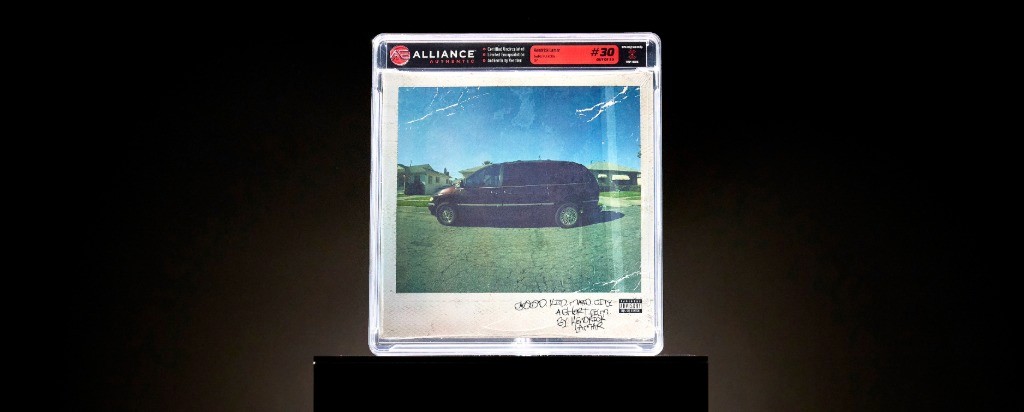
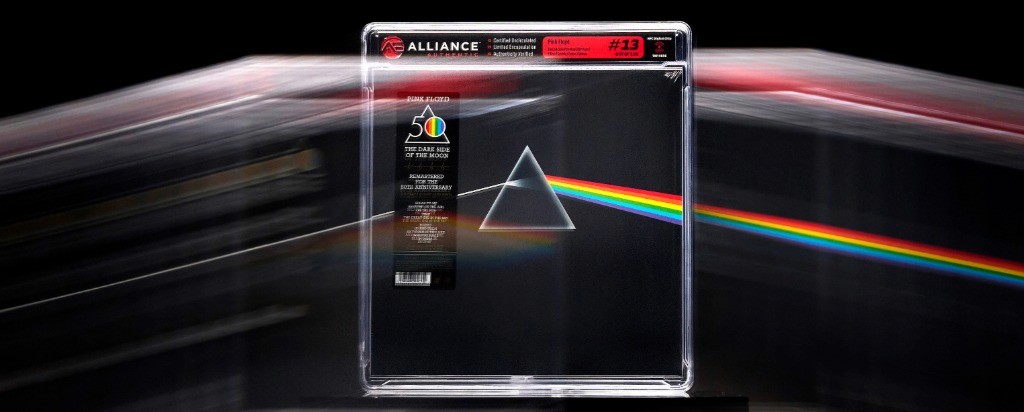
Vinyl record encapsulation seals a record in archival-grade, inert materials to create a physical barrier against handling, dust, and atmospheric exposure. It does not alter the record's sound or condition. It works alongside proper storage practices, not instead of them. Encapsulation protects against:
Repeated handling and accidental contact with the playing surface
Dust and airborne particulate buildup over time
Fluctuating atmosphere inside a display or storage environment
Accidental damage during transport or display
Loss of context between the physical record and its documented history
What Materials Are Used for Vinyl Record Encapsulation?
Archival encapsulation relies on materials chosen for chemical stability, not appearance. Each property addresses a specific way vinyl and paper components degrade over time. These are the materials and properties that matter most:
Archival-grade, inert polymers: Don't react with vinyl's surface or off-gas compounds that cause stickiness or discoloration.
Acid-free components: Prevent the slow acid transfer that causes paper labels, jackets, and inserts to yellow and become brittle.
PVC-free construction: PVC-based plastics are one of the most common causes of vinyl degradation through plasticizer migration and surface reaction.
UV-resistant seals: Block the light exposure that fades labels and jackets and weakens paper fibers over time.
Non-off-gassing seals: Prevent chemical vapors from building up inside a sealed environment, which can affect both vinyl and paper over years.
Does Encapsulation Improve Sound Quality or Change the Record?
No. Encapsulation has no effect on a record's audio quality or its physical or sonic properties. Encapsulation is a protective barrier, not a treatment. It doesn't clean the vinyl, alter its surface, or change how a stylus interacts with the grooves. A record sounds the same before and after encapsulation, if it's ever removed and played. This is a common misconception, partly because other collectible categories use sealed cases that people associate with enhancement or restoration.
Vinyl encapsulation serves a different purpose: protecting a record's original, pre-retail condition from handling, dust, and atmospheric exposure over time.For collectors, this distinction matters. A preserved record is the same physical object as it was before preservation, protected against the forces that would otherwise degrade it. Claims about a preserved record's condition refer to what has been prevented, documented handling history and physical protection, not to any change made to the vinyl itself.
There is a downside to encapsulation though. It’s a double-edged sword. You can preserve the record you love in pristine condition, but you also can’t listen to it anymore. Now we know what you’re thinking: records are meant to be listened to. And we can’t argue with you. We love the records that shaped us, formed our identities, and soundtracked our lives. It’s the reason we buy multiple versions of the same record. And that’s where preservation and encapsulation comes into the fold.
Encapsulation exists for records collectors intend to preserve rather than circulate, where original, unhandled condition matters more than daily access.
How Is Preservation Different From Grading?
Preservation and grading answer two different questions. Preservation describes the ongoing practices that protect a record's condition over time. Grading assigns a fixed, subjective score to a record's condition at a single point of inspection.
The two work at different stages and for different purposes. A record can be graded once and never touched again. Preservation is continuous, covering storage, handling, and environment for as long as the record exists.
Preservation | Grading |
|---|---|
Ongoing practices: storage, handling, environment | A one-time condition assessment |
Applies for the life of the record | Applies at a single point in time |
Focuses on preventing future degradation | Focuses on documenting current condition |
Includes documentation like provenance and chain of custody | Assigns a fixed score or grade |
"Certified Uncirculated" reflects pre-retail handling history | A grade reflects condition at inspection |
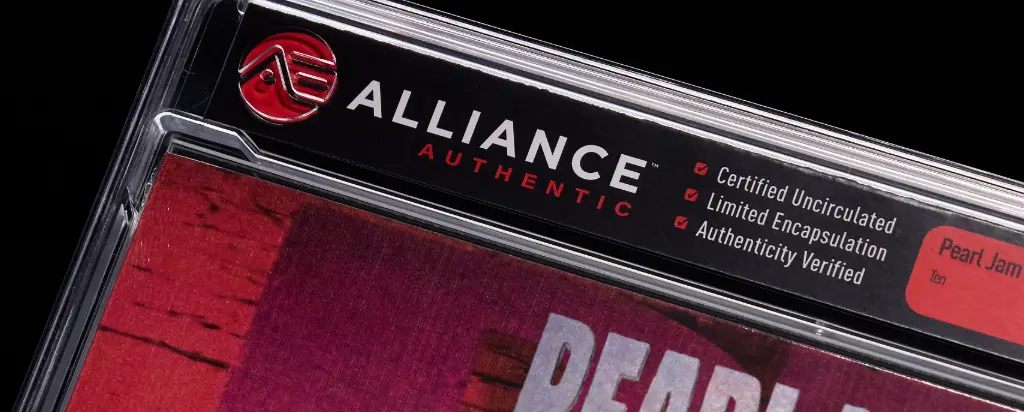
"Certified Uncirculated" is a preservation term, not a grading term. It documents that a record was preserved in its original condition before ever reaching retail. It is not a score on a condition scale.
What Does a Complete Long-Term Preservation System Look Like?
Long-term preservation works as a system of six components, each playing a distinct role the others can't replace: stable environment, protective materials, careful handling, encapsulation, documentation, and verification. Removing any one layer leaves a gap the others can't fully cover. The sections below walk through each layer and how it fits into the whole.
What Temperature and Humidity Range Is Ideal for Vinyl Storage?
Vinyl records store best between 65-70°F (18-21°C) and 40-50% relative humidity, figures consistent with general archival and library-science guidance for mixed paper and polymer media.
Stable conditions matter more than hitting an exact number. Archival guidance for paper and polymer materials generally recommends avoiding daily swings of more than a few degrees or a few percentage points of humidity, since fluctuation causes more damage than a slightly high or low but stable baseline. Basements, attics, and garages typically fail on stability even when the average temperature looks acceptable.
Which Storage Materials Should Be Avoided?
Some materials common in older or budget storage setups actively damage records over time. Avoid:
PVC-based inner or outer sleeves
Acidic, non-archival cardboard jackets or backing
Rubber bands used to bundle records or inserts
Spray adhesives or tape applied near the record or sleeve
Paper sleeves with visible printing ink on the inside surface
Why Does Handling Matter for Long-Term Preservation?
Handling matters because most vinyl damage happens during use, not storage. Fingerprints leave oils that attract dust and can affect the surface over time. Gripping a record by its edges and label, rather than the playing surface, prevents most of this damage. Frequent removal and reinsertion, even with careful technique, adds cumulative wear that stable storage conditions alone can't undo.
How Does Encapsulation Fit Into the System?
Encapsulation fits in as a sealed, inert barrier against handling, dust, and atmosphere, layered on top of proper storage, not replacing it. Alliance Authentic applies this approach to records collectors want preserved in original, pre-retail condition, pairing archival-grade encapsulation with documented provenance and NFC-secured verification. The encapsulation itself is one layer. The storage conditions around it still have to hold up.
What Should Be Documented for Long-Term Preservation?
Documentation turns preservation from an assumption into a record collectors and future owners can verify. Three categories matter most.
Chain of custody: A record of who has owned or handled the record since it was preserved, including transfers between collectors. This matters because provenance without a documented chain is just a claim. Each transfer should update who currently holds the record, keeping the history intact rather than resetting with each new owner.
Acquisition history: Where and how the record was originally sourced, including details relevant to its cultural, historical, or personal significance. This distinguishes a documented preserved record from one with an unverifiable backstory, since acquisition context is part of what a collector is preserving, not just the physical object itself.
Verification: Covered below. This is what ties the documentation above to the physical record itself.
How Does NFC-Secured Verification Work?
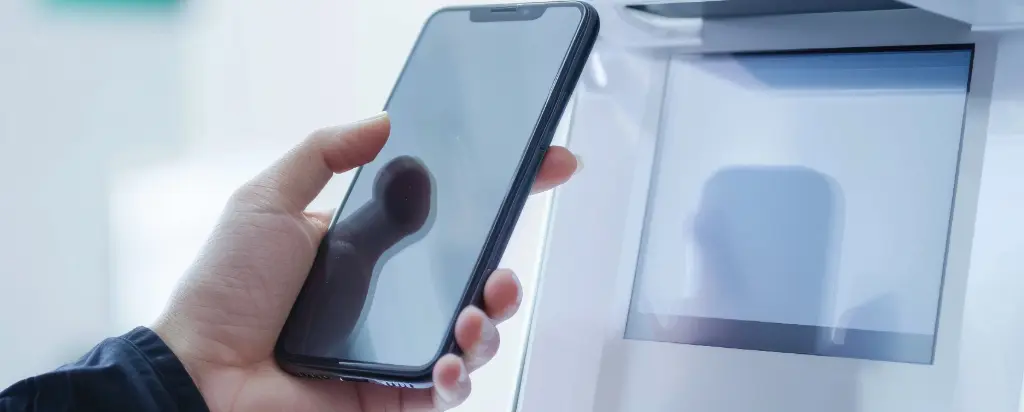
NFC-secured verification links a physical record to its documented history through an embedded chip that can be scanned to confirm identity, condition documentation, and ownership history. This ties the paper trail to the object itself, so provenance travels with the record rather than living in a separate file. No single layer, environment, materials, encapsulation, or documentation, guarantees preservation on its own. The system works because the layers work together.
Preserving Vinyl for the Long Term Starts With the Right System
Long-term vinyl preservation isn't one decision. It's a system: stable environmental conditions, archival-safe materials, careful handling, encapsulation where appropriate, and documentation that travels with the record.
Preservation and grading are two different things. Preservation is what a collector does continuously. Grading is a one-time condition assessment. A record can be graded and still degrade without proper storage. It can also be well stored without ever being graded at all.
For collectors preserving records with real cultural, historical, or personal significance, understanding how these layers fit together is the difference between a collection that holds up and one that quietly degrades in a closet. Learn more about how vinyl preservation works and see how one system applies these principles, from sourcing to encapsulation to verification.
Brian Tunney
Lifelong vinyl and CD collector with a focus on obscure indie labels of the '90s. And that's Pablo.

FREQUENTLY ASKED QUESTIONS


FIND YOUR FOREVER COPY

Curated

Numbered

Limited

Certified Uncirculated

NFC-Secured